Reflecting on 2025

This year has been my second year at the Centre for Digital Music (C4DM), Queen Mary University of London (QMUL) as a Senior Lecturer in Sound and Music Computing. It is also the second and last year of the AHRC-funded Sensing the Forest project, which I am the principal investigator. We are now concluding this chapter by releasing code repositories and datasets; analysing the data; and producing the final research outputs. It has been an amazing and intense journey! This is also the year when I started the research lab Computational Sonic Arts Laboratory at C4DM/QMUL.
Following my previous year reflections (2020, 2021, 2022, 2023, and 2024), in this blog post, I reflect on how this year has been in terms of key activities and outputs, as well as discuss my intentions for 2026.
Research
In 2025, my research has focused on the AHRC Sensing the Forest project and publications related to PhD and master’s students. I have co-authored one journal article, four conference papers, an abstract with proceedings, and a position paper:
- Zheng, S. J., Xambó, A., Bryan-Kinns, N. (2025). “Exploring gestural affordances in audio latent space navigation”. Frontiers in Computer Science, Sec. Human-Media Interaction, Volume 7 - 2025, https://doi.org/10.3389/fcomp.2025.1575202.
- Zhang, Q., Barthet, M., Xambó, A.. (2025) “From Shape to Music: Contour-Conditioned Symbolic Music Generation”. Proceedings of the International Conference on Technologies for Music Notation and Representation (TENOR 2025). Central Conservatory of Music Beijing, Beijing, China.
- O’Flaherty, T. F., Elmokadem, M. B., Xu, X., Manjunatha, K. N., Roma, G., Xenakis, G., Xambó, A., (2025) “Sonification Mappings for Sensing Tree Stress: A DIY Approach”. Proceedings of the Web Audio Conference 2025 (WAC 2025). Ircam/Mozilla, Paris, France.
- Xambó, A., Roma, G. (2025) Building a Dataset of Personal Live Coding Style Using MIRLCaProxy - A Journal of Creative Sonic Exploration under Constraints and Biases. In Proceedings of the International Conference of Live Coding.
- O’Flaherty, T. F., Marino, L., Saitis, C., Xambó, A. (2025) Sonicolour: Exploring Colour Control of Sound Synthesis with Interactive Machine Learning. In Proceedings of the New Interfaces for Musical Expression.
- Xambó, A. (2025) Live Coding a Chorale of Sounds Using MIRLCa: State of Affairs and Implications. In Proceedings of the SuperCollider Symposium 2025. Johns Hopkins University. Washington D.C., USA.
- Xambó, A., Batchelor, P., Marino, L., Roma, G., Bell, M., Xenakis, G. (2025) “Soundscape-based music and creative AI: Insights and promises”. UK AI Research Symposium (UKAIRS ’25), 8-9 September 2025, Newcastle, UK.
Additionally, I have been involved as a guest co-editor of the following special issue, which has included 15 publications on the topic of embodied perspectives on sound and music AI:
- Erdem, Ç., Xambó, A., Serafin, S., Griwodz, C. (2025). Special Issue on Embodied Perspectives on Sound and Music AI. Frontiers in Computer Science.
Teaching
This year, I completed the Postgraduate Certificate in Academic Practice (PGCAP) to become, since summer 2025, a Fellow at the Higher Education Academy. Similar to last year, I have contributed to the following two modules as a module organiser and lecturer:
- ECS742P Interactive Digital Multimedia Techniques (Autumn 2025)
- ECS637U/ECS757P Digital Media and Social Networks (Spring 2025)
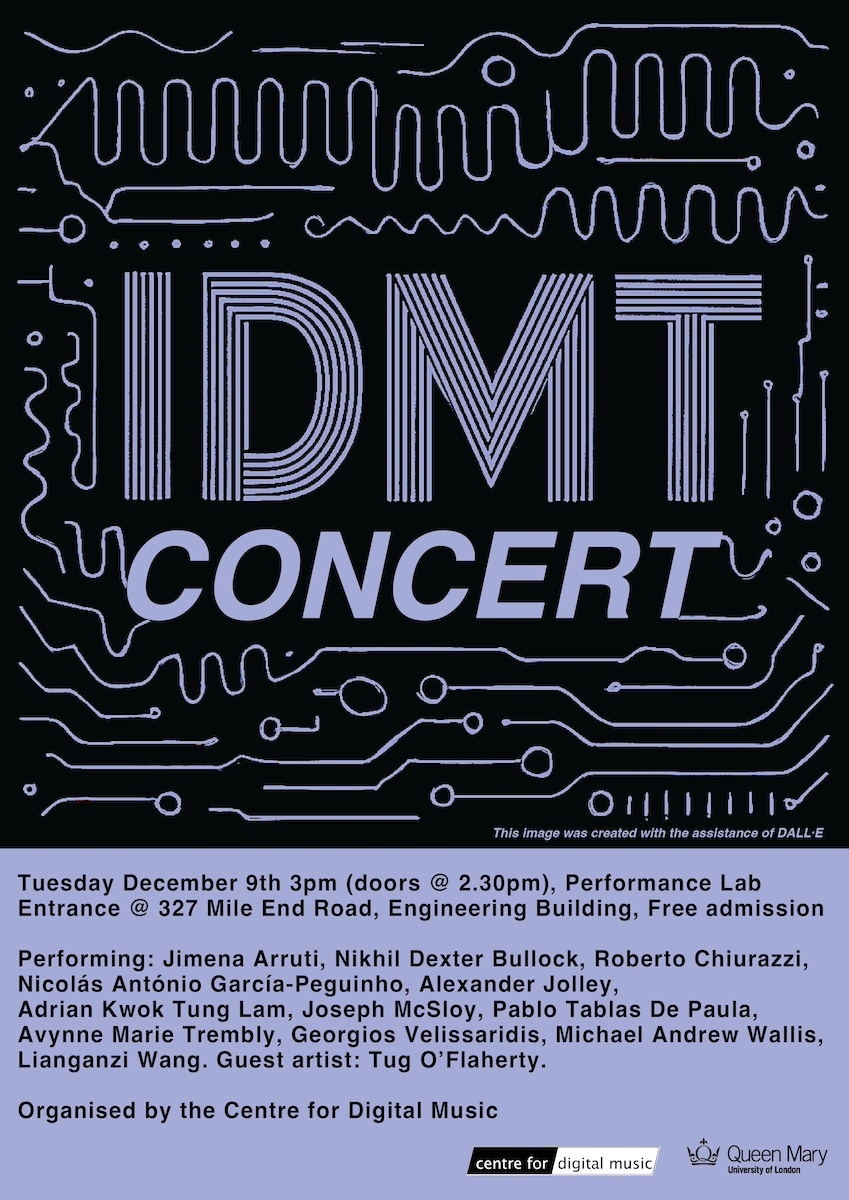
As part of the Interactive Digital Multimedia Techniques (IDMT), we organised a concert at the end of the module featuring the instruments built by the students during the module.
Music
This year, I was able to materialise the Sensing the Forest performance twice:
- Xambó, Anna (November 19, 2025). Sensing the Alice Holt Forest, live performance. Web Audio Conference 2025, IRCAM/Mozilla, Paris, France.
- Xambó, Anna (May 29, 2025). Sensing the Alice Holt Forest, live performance. 9th International Conference on Live Coding (ICLC2025), 27 May 2025 - 31 May 2025, Barcelona, Spain.
Community
Several activities have involved community building: WHEN activities, invited talks, conference organisation, the research lab activities, PhD student examinations and public engagement activities.
WHEN
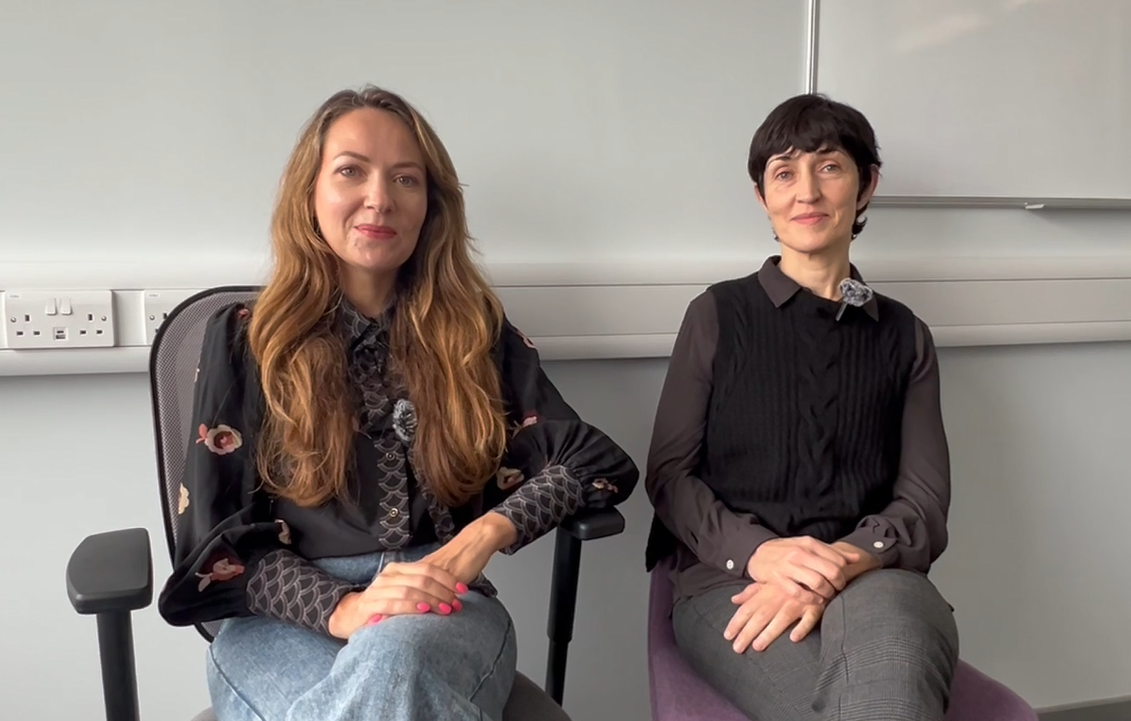
We had a second round of funding (ERIC Fund 2nd round 2024/25) to carry on with the activities of the EECS Women in Higher Education Network (WHEN). We have celebrated togetherness with the WHEN members going to yoga, zumba, painting in the dark, silent disco, summer aperitif, cinema, workshops, science events, networking events, tea party, and meetups. Together with Katja Ivanova, we were interviewed by Aurélie Leroy for the School of Electronic Engineering and Computer Science News: Empowering women in tech at Queen Mary: the story behind WHEN.
Invited talks
In 2025, I have been invited to give several talks. Among all of them, I would like to highlight the invited keynote at the International Conference on Live Coding 2025 in Barcelona:
- (February 28, 2025). Invited talk "Intersecting Sonic Arts & Computing: A Portfolio Journey" at Music Engineering Forum. University of Miami. Miami, FL, USA.
- (March 13, 2025). Oral Presenter (online): Live Coding a Chorale of Sounds Using MIRLCa: State of Affairs and Implications". SuperCollider Symposium 2025. Johns Hopkins University. Washington D.C., USA. Paper
- (May 14, 2025). Oral presenter with Peter Batchelor. Guest Lecture: “Sensing the Forest - UAL workshop”. Computer and Data Science and AI, UAL Creative Computing Institute, University of the Arts London, London, UK.
- (May 28, 2025). Invited keynote “Liveness as an open work: an ongoing live-coding algorithmic journey” at the International Conference on Live Coding 2025 (ICLC 2025).
- (October 15, 2025). Oral Presenter: "Sensing the Forest". Aix-Marseille University - Master in Acoustics and Musicology, Marseille, France. Online.
- (October 28, 2025). Oral Presenter (online): "Sensing the Forest: Exploring Climate Change Through Soundscape Datasets from DIY Streamers at Alice Holt Forest". Freesound Day programme, Barcelona and online. You can register following this link (attendance is free)
- (December 10, 2025). Oral Presenter: "Sensing the Forest: A Multidisciplinary Exploration of Sound Data". Turing Seminars, Wills Memorial Building, Jean Golding Institute, University of Bristol, Bristol, UK.
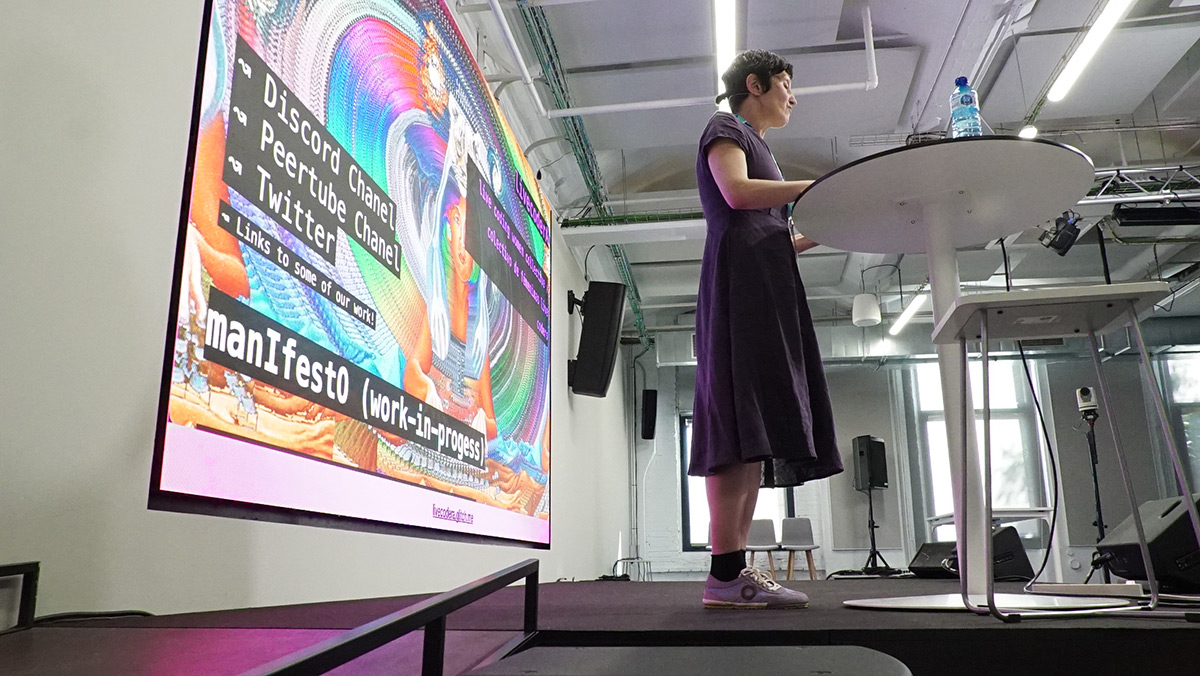
I have been also presenting posters at UKAIRS 2025 and WAC 2025:
Computational Sonic Arts Lab meetups
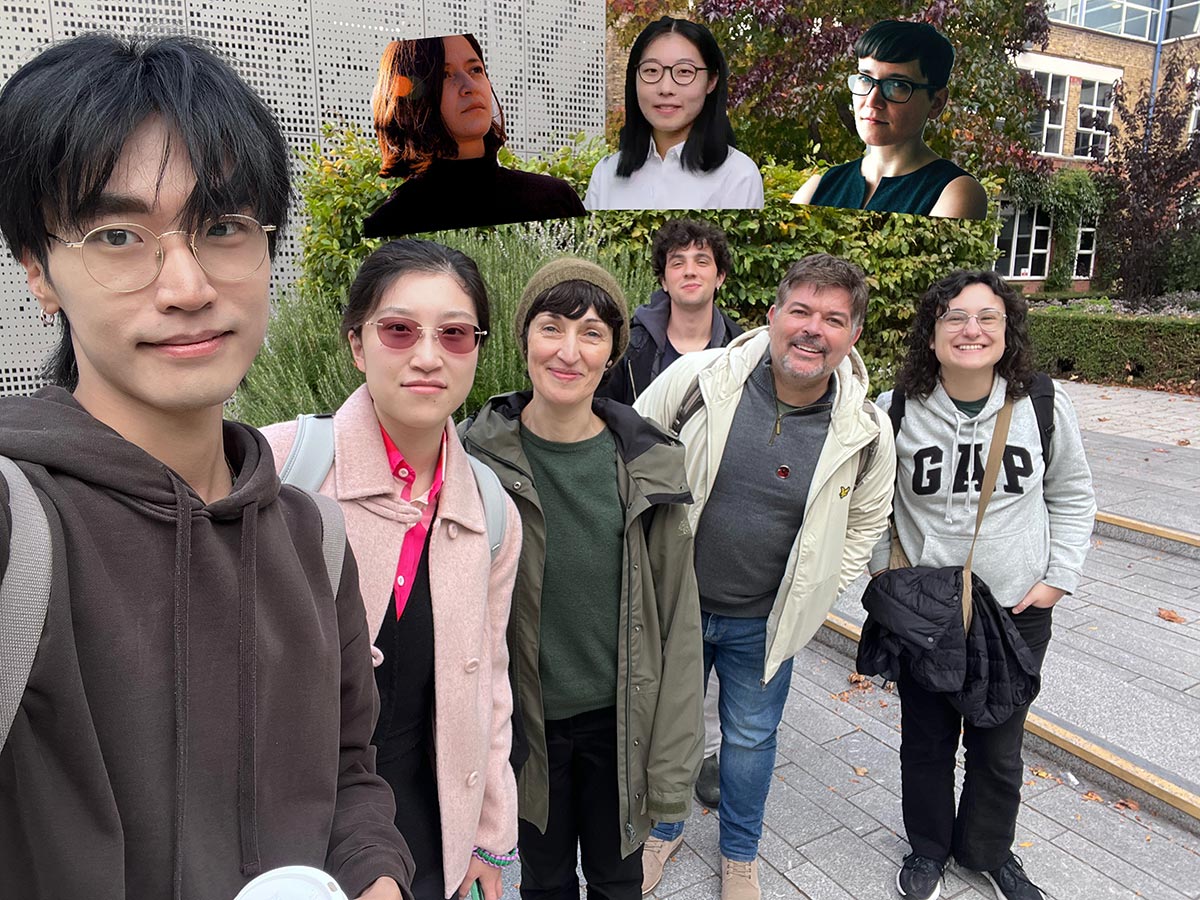
I am very happy about the start of the monthly group meet-ups with the Computational Sonic Arts Laboratory (CSAL), which started in October 2025. The research team is based in C4DM at QMUL, dedicated to advancing the intersection of sonic arts and cutting-edge technology. Apart from the meetups, we have launched a website to keep up with the latest news and announcements related to the group members.
Conference organisation
In 2025, I have been involved in two conference as part of the organisation:
- International Conference on Live Coding 2025, UOC / TOPLAP Barcelona / Axolot Collective, Barcelona, May 27-31, 2025, as a member of the Papers Committee.
- Web Audio Conference 2025, IRCAM / Mozilla, Paris, November 19-21, 2025, as a Paper Co-chair.
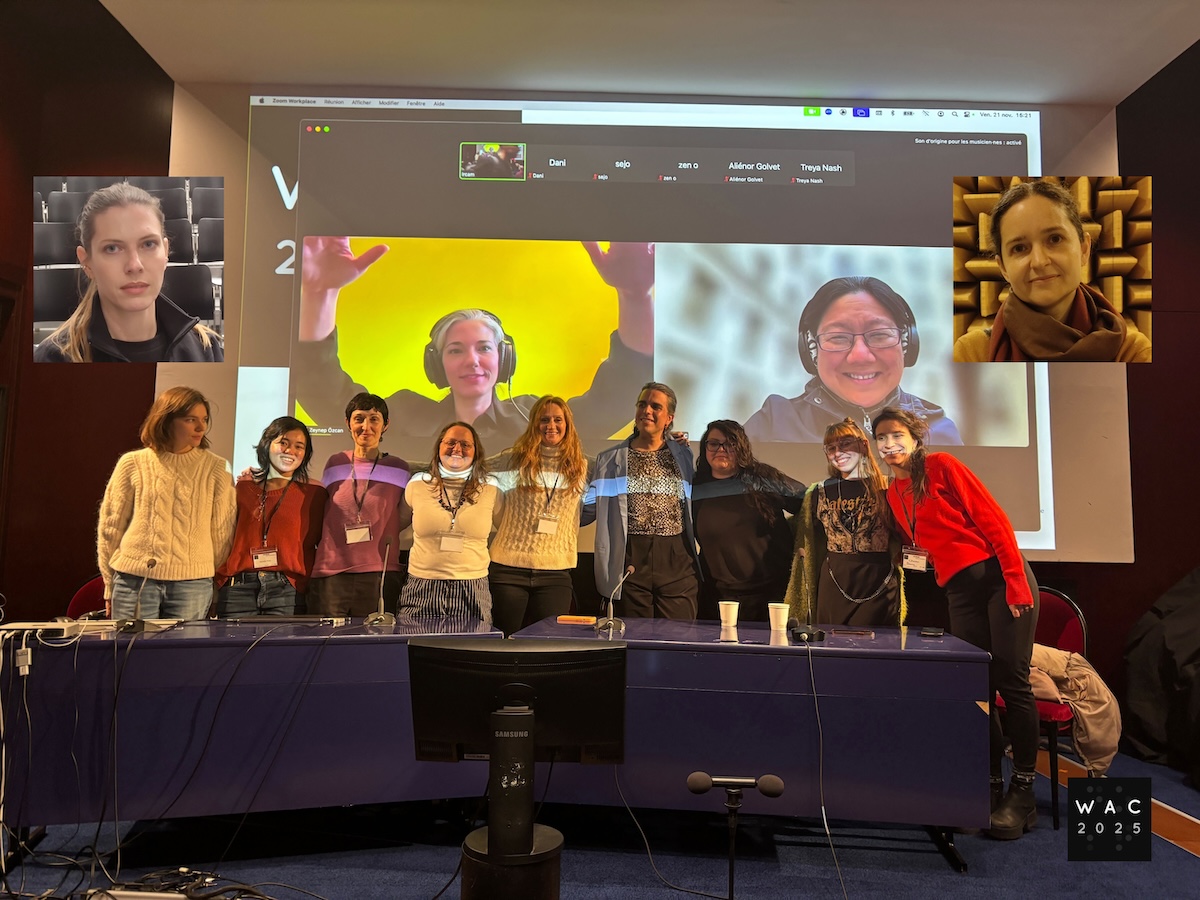
It has been a pleasure to contribute to the two conferences, both as an organiser and author. To pick one of the numerous highlights: we had an insightful conversation, sharing our experiences and proposing new perspectives at the Diversity Panel hosted by the Web Audio Conference 2025. With the participation of: Panagiota Anastasopoulou, Silvia Binda Heiserova, Nela Brown, Elaine Chew, Joana Chicau, Aliénor Golvet, Bruan Guarnieri, Treya Nash, Zeynep Özcan, Luisa Pereira, Clara Rigaud, Jessica A. Rodriguez, Suzanne Saint-Cast, Ariane Stolfi, Rochelle Tham, Eveline Vervliet, and Anna Xambó.
PhD examiner
I have been honoured to be a PhD examiner for the following PhD candidates:
- (November 5, 2025). Internal PhD examiner for Xiaojing Liu. PhD thesis title: "Automatic Mixing for Teleconferencing, Gaming, and Live-Streaming". PhD degree in Computer Science; School of Electronic Engineering and Computer Science; Queen Mary University of London, UK.
- (March 6, 2025). Internal PhD examiner for Nicole Robson. PhD thesis title: []"Human-Sound Interaction: The Relational Experience of (In)Audible Installation Art"](https://qmro.qmul.ac.uk/xmlui/handle/123456789/111051). PhD degree in Media Arts and Technology; School of Electronic Engineering and Computer Science; Queen Mary University of London, UK.
Public engagement
I have also contributed to the AI & Music Hacklab powered by Sónar+D “AI Performance Playground”, and to the production of two podcasts related to the Sensing the Forest project:
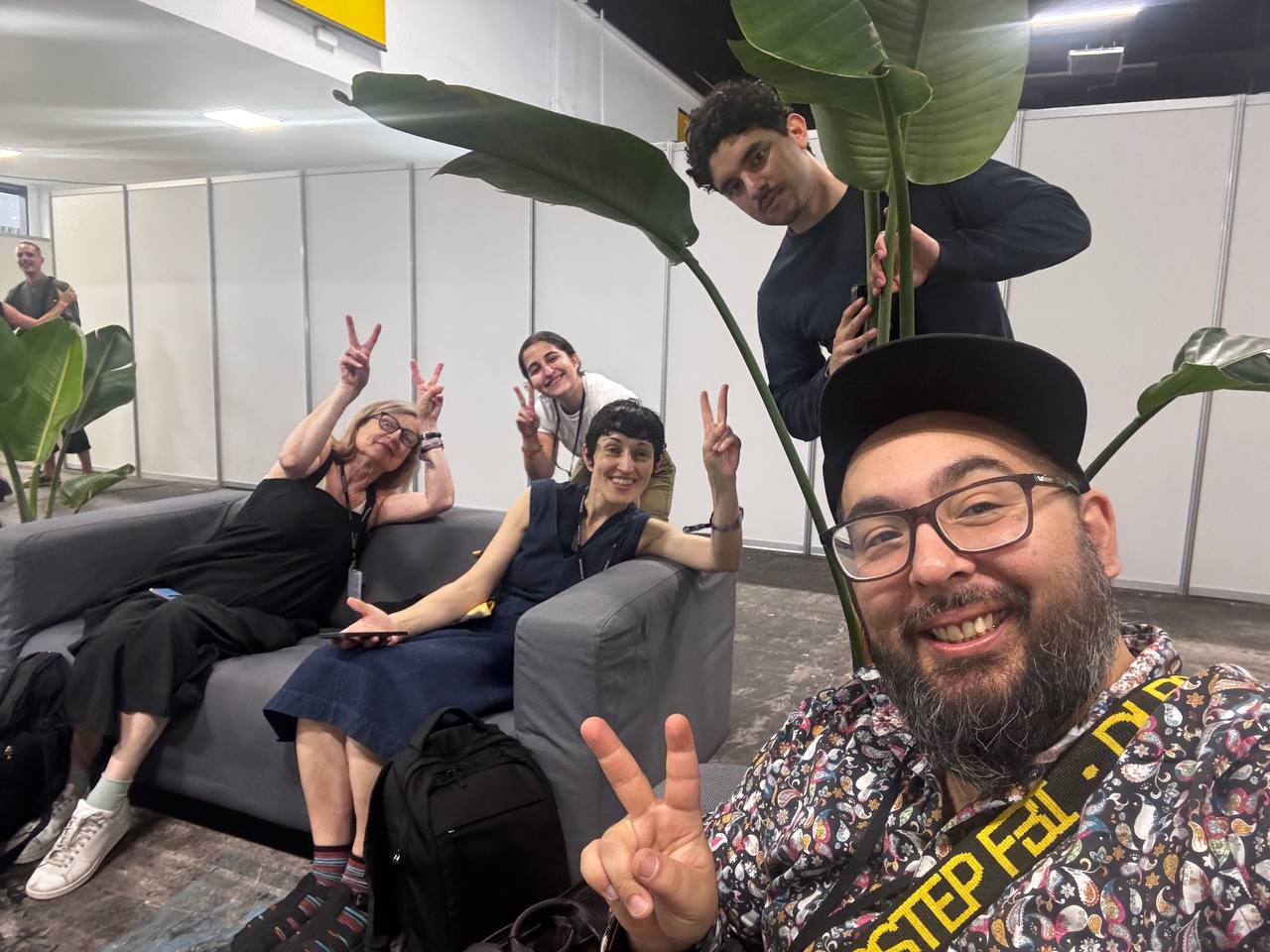
The Sónar+D “AI Performance Playground” was a blast. We co-facilitated the event initially with Peter Kirn (in the conceptualisation of the hacklab and selection of the candidates) and then together with Ben Cantil (DataMind) in the execution of the event, which has been curated by Antònia Folguera with the help of Gemma Belmonte. The hacklab took place between 11th and 14th June as part of Sónar+D 2025, powered by S+T+ARTS, with support from La Salle-URL. Artists, coders, musicians, DIY creators, and creative technologists were brought together to explore and deepen their use of machine learning tools, AI, and other related technologies for musical performance, which culminated in a collaborative performance at SonarÀgora, open to the general public at Sónar by Day. As part of the hacklab, we organised an enlightening talk panel with Rebecca Fiebrink (University of the Arts London), Nao Tokui (Neutone), Christopher Mitcheltree (Neutone/AIM/C4DM) and Shuoyang Zheng (AIM/C4DM), moderated by Ben Cantil (DataMind), to discuss the challenges and opportunities of being an artist using AI tools. For further info, you can read Shuoyang’s blog post on AIM at Sónar+D 2025.
In addition, I have been appointed technical co-director of the C4DM Studios, with the idea being to work in a team together with Johan Pauwels, Lewis Wostanholme, Ciaran Corr, and Mark Sandler, towards keeping the C4DM Studios active and accessible to all, a vision started by the previous qMedia Studios director Mathieu Barthet.
Other achievements / press / expositions
- (November 1, 2025) Sensing the forest: exploring climate change through sound, AI and art, Featured AI research case study series, EECS, QMUL.
- (October 28, 2025) Empowering women in tech at Queen Mary: the story behind WHEN. In conversation with Katja Ivanova and Anna Xambó Sedó. Interview by Aurélie Leroy. News & Events, School of Electronic Engineering and Computer Science, Queen Mary University of London. [Video].
- (October 21, 2025) Hear Nature Speak through Sound Installations, A Podcast with Sensing the Forest Artists - at Alice Holt Forest, Hampshire (Episode 1) produced by Shuoyang Zheng. AHRC Sensing the Forest. The first episode presents an interview with Anna Xambó Sedó (Principal Investigator of Sensing the Forest, Queen Mary University of London) conducted by Hazel Stone (National Curator of Contemporary Art, Forestry England), and six pieces of voice commentary recorded by summer school artists Ed Chivers, Kate Anderson, Gabrielle Cerberville, Austin Blanton, Miles Scharff, and Luigi Marino.
- (March 17, 2025) Gender Equality Directory of Good Practice and Research: EECS Women Higher Education Network (WHEN). In conversation with Katja Ivanova and Anna Xambó Sedó.
Travel
Travelling is one of my favourites. This year, I have been travelling to:
- Oslo, Norway (3-5 March 2025, International visit with the AIM students at the University of Oslo).
- Barcelona, Catalonia, Spain (27-31 May 2025, ICLC 2025; and 11-14 June 2025, Sonar+D).
- Plymouth, UK and North of Spain (Cantabria, Asturias), in July 2025.
- Newcastle, UK (8-9 September 2025, UKAIRS 2025).
- Paris, France (19-21 November 2025, WAC 2025).
- Highlands, Scotland, in November 2025.
- Bristol, UK (10 December 2025, Turing seminars, Jean Golding Institute, University of Bristol).
- Begur, Costa Brava, Catalonia, in December 2025.
New Year’s resolutions
This year has been all very exciting, but too roller-coaster at times. I am missing the ability to have more time to read classics and make music with new self-made tools. I think this should be possible, and it is, as a matter of fact, a question of being more efficient with the time organisation. Also, I am constantly advised to learn to say no. This is a must this year. I have been adapting Ryder Carroll’s Bullet Journal Method for some time now, but I think I should apply it even more systematically. So my main New Year’s resolution is to sacredly save regular time for my personal studio space, which I will temporarily call Experigardium – “the experimental garden.” I believe that this balance is essential to be successful in the long run.
Happy New Year 2026!
Acknowledgements
I am thankful to be surrounded by talented and inspiring people at C4DM/EECS/QMUL, London. Special thanks to Gerard.